


Offshoring success is not solely determined by where companies hire, but by how they build and manage global teams.
Many offshore challenges come from poor systems, unclear expectations, and weak integration, not the talent itself.
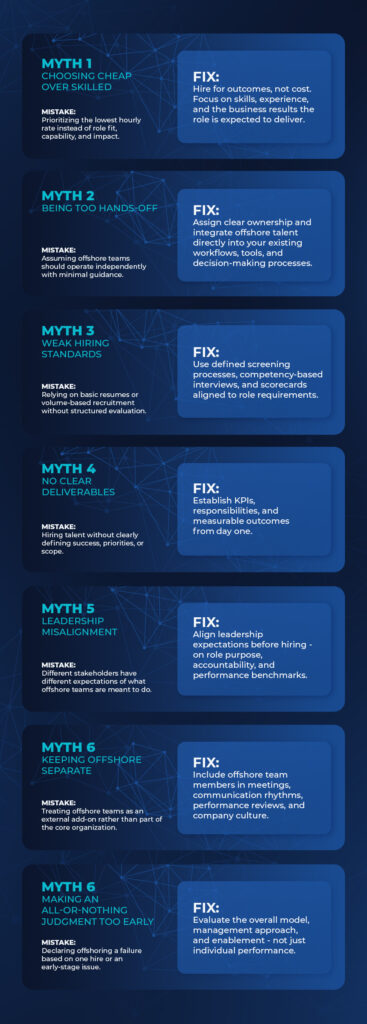
Here are the most common offshoring myths and the strategies high-performing companies use to overcome them.
Final Takeaway
Offshoring is no longer simply a way to reduce costs, it’s a strategy for building a more scalable and resilient business. The companies that achieve the greatest success treat offshore teams as a core part of their operations, not just as external support.
When businesses invest in:
- Strong hiring and talent alignment
- Clear expectations and measurable KPIs
- Consistent leadership involvement
- Full integration across teams and workflows
Offshore teams become more than operational support; they become a strategic advantage that improves execution, increases capacity, and supports long-term growth.
The difference between offshore teams that underperform and those that drive real business impact often comes down to leadership, integration, and operational structure.
If you’re exploring how to build a high-performing offshore team, ScalableOS can help you create a strategy designed for long-term growth and operational scale.